


How top restorers win more business
Learn how to win more jobs like a pro
Watch our Director of Sales, David Carroll, and Coyne Borree, Owner of Midwest Restoration, as they discuss how to become a strong operator, where to invest, and how to measure success.
Welcome to the webinar on how topper stores win more in business. I’d like to introduce a good friend of mine and a co presenter in this presentation, from Midwest Restoration. Koin, thanks for joining us. Thank you for having me, Dave. It’s been great knowing you the last few years. Agreed. Can you me, Peter? We we can hear you alright for sure. For sure. Alright. I just wanna make sure. Sounds good. Apologies in advance. Sometimes apologies in advance. Sometimes I mumble and trail off here. So No worries. We’ll keep you on track. Right on. So Coin and I met in twenty seventeen through through Encircle and and Coin owning Midwest Restoration. I mean, the reason I wanted Coin to join this presentation on how top restores win more in business because he scaled this company from the ground up. They actually had their twelfth year anniversary recently. I want to say it was a couple of days ago. So first off, congrats going on that milestone. Thanks, Dave. It’s a funny story. We were actually talking yesterday that I forgot about it. It was actually January eight, I believe, but we actually forgot about it. And I mean, we’ll get into it more later, but throughout this call, but when you do start focusing on the actual business that you forget about the stuff that you don’t you don’t need the recognition of the accolades or, know, a couple years ago and it you know, we look for the five year anniversary or ten years. So it’s pretty cool. Once you get so involved and focusing on that, that that stuff really is a secondary secondary thing. Absolutely. And and with Coin, he’s a independent contractor, you know, in the, Wisconsin area servicing residential, commercial, across most lines of of, you know, claims, water, fire, emergency, reconstruction. And, you know, the theme of our presentation is, you know, what makes a strong operator, and how can you avoid running high and dry. And as a lot of restoration business are are scaling, especially, with the increased, you know, disaster relief, efforts just from from cat situations, I wanted to bring Coin on, to share his story over the past twelve years and how he was able to to scale his business. So without further ado, let’s get into this coin. Where I want to start, is just explaining to to the people, you know, here on on the webinar with us what we’re gonna cover, and then we’ll get into, the meat of the presentation. So we’ll talk about how, you know, contractors fall short and where, they fall short, how to overcome the shortfalls, how they manage growth, and incorporate change within their business Given that this industry is ever changing, especially with the, data carriers are requiring, it’s important to ensure that you’re staying up to date with the innovation trends, and where top end you know, restores invest and and where you can get the most bang for your buck, and then what KPI scores we look for, in order to, you know, manage headwinds and tailwinds throughout the the business. So if we look at, you know, the contractors, you know, where where most fall short, You know, what three areas that that stuck out with me really started with the inconsistent process, managing growth, and for training. And just ask, the people here on the webinars to participate in a poll, and I wanna see where they view, you know, most contractors falling short and and where, they would like us the three, you know, shortfalls that we, you have on the screen here. So I’ll give you a few minutes, about thirty, thirty seconds to a minute just for the poll. Half half the participants have voted. We have sixty seven percent in inconsistent process and thirty three percent in poor training. So here are the poll results. So let’s start with inconsistent process since that was the majority of the participants that said we’re contractors fall. So if we talk about inconsistent process, you know, where do you find the most inconsistency happens throughout manning a managing a job, Coin? You know, it’s a little bit this industry there’s no secret that in this industry that it’s a lot of gray area. You know, it’s it’s it’s noted if you’re selling a house per se, really, it’s you present the offer, you get the approval, you get the financing and you buy the house and you go to closing. And I’m not saying that it’s not hard industry it is, but so in this industry it’s the water damage and the fire damage, it’s something different every day. It’s a different house, different people, different everything. So inconsistent process as far as, okay, get the phone call, go to the house, do the job, and okay, well sometimes we might have a paper file or we might not do the correct well, the homeowner wanted me to go downstairs and just just get going on the job. He really pressured me. So I didn’t I didn’t get initial pictures. Okay. Well, no big deal. But it is a big deal because if you didn’t get the initial pictures, you might not be able to all know that if you didn’t write it down, it never happened. So documentation is a lot a huge key of success in this business, especially in the year twenty twenty, you know, with technology improving every day too. So you don’t take initial pictures. Yeah, it’s not a big deal. It is because in the back end, if you have to prove yourself to maybe the insurance adjuster says, no, there wasn’t water in this room Or there was water in this room or why did you tear this out and you didn’t have to. Well, now you have to prove yourself and you can’t and then you’re going be in a fight trying to get paid for the job and you’re not going get paid for it. And you can put that to anything whether it be documentation process, the moisture mapping, psychometrics, and even or or even just the process as far as, you know, I can I can we’re all guilty of it? If you’re not, I I I wanna talk to you, because even for when from the initial call, who’s on call for the week? You know, is it is it a two man company? Is it a a hundred a one man band, a hundred man band man? It doesn’t matter. If you can’t duplicate your process with basic copy and paste to a different location or a different a different person of an ownership, then you’re then you are falling short already. And I’m not saying I’m perfect by any means or I have a a perfect process either, but like they they said, so inconsistent or consistency, whether it be the the call, the first respond, how do you talk to your customer on the phone? Did you verify did you verify coverage? Did you not verify coverage? Did you verify your moisture mapping? Did you have somebody do they want an estimate? Do they want a written estimate? Do they not want one? Again, a lot of stuff I think people get so excited in the business that you know, yeah, you might see a huge potential huge mitigation job and just jump on it and do the work and get it done and you want to get paid for it. All that mitigation job might not be covered because somebody didn’t ask the correct questions upfront or they didn’t take the proper documentation. So even if you did it right in your head and you did everything perfect, there’s again, if you don’t have the actual process down and it sucks, it really sucks. I’ve lost a lot of money in this business because of it And I don’t care how big or small you are, you can lose a ton of money real fast. And I’m trying to get back to one of those here. Go ahead Dave. Two parts that you mentioned that stuck out to me. One is how to duplicate or copy the process throughout the claim, right? So you have claims that are similar in shape and size, but it comes down to a checklist, making sure that you talk to the homeowner and understand if they have the claim covered is one part of the checklist. Documentation is another part of it. And when you look at a lot of the carriers and the conversations that you know, we’re having around supporting documentation and having the documentation report in various formats, really, what a a contractor needs to be able to do is convey a complete file to an adjuster. And you need to be able to present that claim like they’re on-site with you, although we both know that a lot of adjusters are are sitting behind the desk as the model has has transitioned away from the field and and more, towards desk adjusting. And if a contractor can provide that level of documentation and detail, that’s the difference between two and three days versus two and three weeks of getting that approval. And for a contractor, I know that you can speak well to this, the time frame of getting an estimate approved can pay off dividends in receiving the check faster and starting the job. So at the end of the day, you’re helping, you know, that customer get back to a repaired state. Yeah. And and to add on top of that too, Dave, not just the consistency, but also the accuracy of it. I see so many times, you know, I I try to help, do this consulting here and there even across the literally across the country with people that, I think we were talking about in Vegas one time together that, you know, you want to scale something whether you’re at a million dollars a year and you’re stuck in a million or you can’t get past two million or you’re having this many troubles, but you’re to continue to grow and grow and grow. The only that Not only is the revenue going to grow, but the inconsistencies are going to grow and the problems are going to grow too. So before you’re focusing on growth, I definitely can focus on the process. And that’s a good transition into the second area that most contractors will fall short on is managing that growth curve. Right? So you have a process that you’re looking to instill and and build when you’re early on with a cohort of of strong employees that when you go to hire additional headcount, you have that process set in stone. But there’s a few areas that are very difficult to manage, not only in restoration, but just in general business acumen where you have changed management, where you’re you’re changing a process or you’re growing, with with more approval, you know, processes because it’s not just you and, let’s say, you know, your your technician or you and and a few technicians. You have a PM, an office manager, and more people, at the table. So talk to me about, you know, how you go through change management, whether it’s implementing technology or a new process that you’re looking to follow, especially when it comes to a larger claim. Well, he said, let’s look at the three basics on my side of things. Policies, processes, procedures and people. So if you have all those in line, business is going to be amazing. I don’t care what business it is. In regards to hold on, notes here. So you wanna go in a large claim, Dave? See here. As far as the people part of things, I think what people get too comfortable to is that, okay, I hired my sales manager, I hired my sales rep, they’re they’re okay, but they’re not they’re not amazing, but they’re really good at customer service. Well, get that person out of the sales role then. You know, you gotta put people in the position that they’re amazing at, they’re rock stars at. I think people think they’re, you know, some people think they’re quality or something, but it might not be. You might think you’re the best salesperson in the world, but, you know, from the outside of things, think you have to be look at it constructively and be humble and say, no, you’re not. For instance, our rebuild manager two years ago, he was good at rebuilds from what I thought, but turns out the guy was a hell of a salesperson that was able to develop relationships ten times better than he could manage a project. So moving him over into sales and it’s great ever since. As far as the managing growth with a large claim that you said, there’s a big difference between a five or a fifty thousand dollar claim and a five hundred thousand dollar claim. For instance, like you and I were talking a couple days ago, Dave, on Monday, we signed a fire, it’s gonna be all of one point five million. Okay. Ten years ago I wouldn’t know what to do, you know, because of multiple reasons but as of right now is the best feeling in the world is to walk into that fire knowing that we are the best fit for this, the customer is going to have the best claims experience and the insurance carrier is going to retain insured after that because of that. And if we didn’t have the processes, procedures and people in place, we’d be scrambling, you know, losing sleep over at night, Whereas, for now, it’s really it’s fun. It’s fun to walk in these things and and know that they’re gonna turn out great. And I think that’s one of the biggest rewards of putting the hard work into the front end and researching the products, know, find the Dave Carroll’s, find the Encircle’s, find the you know, maybe I’m not trying to plug anybody, but find the Matterport’s you know, investing that money upfront and you know, you want to work, but if you can’t see the vision, you’re never going to have it either. And this might sound a little bit like motivational maybe, but I mean if your business is not where it needs to be or where you want it to be, it’s not because of the business, it’s because of you where you gotta be. I mean, if you’re I’m assuming most of the people on this call are owners, it needs to start with the owner. It’s not a business problem, it’s a you problem and you need to fix it. Even three years ago, we’re a ten million dollar company and three years ago, we had paper files. My accountant hated me. Literally, he would despise me when we meet. And as far as old, you have to change and that was my problem. I needed to realize that I was the problem. Know, also you need to be around people who are half as crazy as you are. And you know, if you wanna go where you think you want to go, that’s what you have to do. I mean, that’s what I’ve done and I can humbly say that it works and it is working. Well, think about this. How do I phrase this? If you’re not if you’re not the problem, then you’re not the solution either. So if it’s ultimately a business, it’s you. If it’s a system, well, let’s figure that out. You know? If it’s a it’s a big growth problem or a training problem, let’s figure that out too. And one of the, topics that you shared with me that, was a moment. When you were growing from, you know, two to to eight to twenty six people over the course of a few years, you had to decide what part of the business you wanted to to own and be world class in and then hire people, in other positions to then grow the other portion of the business. And in restoration, you have two major departments, right? You have your sales your sales org and then you have your operations org. I know that most, of your time, let’s call it sixty or seventy percent of your time is on the operations side, and you you talked about having the the rebuild estimator, you know, transition from rebuild into sales because that was his wheelhouse. And I think that’s important for an owner to reflect upon and and figure out, you know, where do you fit in that business? Where can you, provide that ten x return to your company and then bring in other people to grow your business, develop the processes where you’re not able to focus on. Because at the end of the day, when you’re looking to grow, you as the owner cannot make all the decisions. And that’s tough to to move away from because at one point, you were making a lot of the decisions, but you are looking to grow past, you know, let’s say that that a million or or two million point and get into the scale of of five to seven to ten. It’s an important, you know, humbling experience to go through. I’ll I’ll mention some of that too, Dave. So and I don’t again, I don’t know who’s on the call or where’s everybody where everybody’s at, but I can probably guarantee you there’s a few people on here that it might be a one man band or a two mom and pop per se operation. And and that’s awesome. That that’s where I started. I literally started out of my eighteen by twenty four foot garage by myself. So, you know, I had to realize too that or I think everybody does that. You have to realize what you’re worth, you know, what and and I’m not putting down a production worker at all because there’s a there’s a spot for everybody and every person in in your business. But at what point are you gonna say, know, you look at maybe one of the big bigger companies in the area, one of the players in the restoration business that I can’t wait to be, I want to be there. You look at it, you drive past the building, look at it like I want to be there, I want to be there. Okay, well you’re not going to be there if you’re still extracting water every time you get a water damage. You know, you gotta realize what you’re worth. If you can pay a production worker, say fifteen dollars an hour to do your extraction. So you’re saying your time is only worth fifteen dollars an hour? Because if you are, just you might as well step away right now and just just hang it up because you you would I promise you, you’ll never get to that point. And it was the hardest thing for me was to do that. The hardest thing for me is to literally take myself out of the field and realize that I could not be the secretary, I could not be the office manager, I could not be the sales manager, I couldn’t be operations director, I couldn’t be you cannot be all those things. As much as you think you can be Superman, you can’t be. And if you do wanna scale your business, you’re you’re gonna have to realize that. And and there’s nothing wrong with the mom and pop shops too that if you don’t wanna scale it as far as revenue growth, you can still scale it as different you know, define growth in different ways. You can hone in on things and, you know, improve your documentation, improve this, because ultimately that’s going to improve your profit margins as well and make your quality of life and everything else better too. Now real quickly before we get into becoming a strong operator, talk to me about some of the training, that you’ve invested in, for your team in regards to, let’s say, ASD courses, WRT, FireLine, total contents, any sales training. You bet. So I think a lot of a lot of people look at, you know, whether it be, let’s say, social media or blogs or whatnot that, you know, it’s it’s huge to have these certifications as yourself as a project manager or coordinator or technician. And as an owner, now don’t get me wrong, I mean, have I’m a triple master with, you know, through the higher CRC and, you know, RIA and have all that good stuff. Okay? But what we’ve realized too, and it’s good to send your people to these trainings as well, but we’ve learned more. It’s more important to have structured training in house, almost like a call your own CE training per se, that to keep people up on things. Yeah, once you get that certification, the ASD or WRT or whatever whatever certification is. Once you have that, yeah, it’s cool, you got the card in your pocket, the master certification on the wall, can you can Google my name, I’ll come up with that. Yeah. That’s really cool. But it gets a lot cooler when your guys actually know what they’re doing in the field because it’s it’s heartbreaking as an owner sometimes. It’s happened. It still does happen that I’ll go in the field randomly to do a check, I miss being in the field randomly, get sick of riding the desk or be in meetings all day that let me stop by a job and just randomly check up on things. It is heartbreaking when I see a containment set up incorrectly or the plastic is sagging because they don’t have a HEPA filter or they don’t have a pre filter on the outside of the container or they don’t have negative air set up correctly. You know, the first I think the first instinct is to, you know, talk to these technicians or project managers and say, what are you doing? You’re doing it wrong. The only reason they’re doing it wrong is because you didn’t train them correctly or either, you know, I’m I’m not saying I’m not on this call, but I didn’t or you didn’t or whoever’s responsible for the business or the direction of operations. I think so many people are getting the habit of pointing fingers that, well, you did this wrong because as owners, yes, we all do it the best because we’ve that’s where we come from, we care the most about the company, right? So when you have to start realizing that when something goes wrong, don’t look at it as a bad thing, look at it as checking yourself to say hey, we yeah, sales, marketing, growth, huge huge jobs are awesome. But if we’re not doing those jobs awesome, if we’re not doing the jobs awesome and the way they should be done, they’re gonna stop coming in because your work’s gonna be shoddy, you’re not gonna get the job done correctly and it’s just not a good product. You’re not gonna have pride in cashing that check at the end the job because you know it wasn’t done the way it should’ve been done. So let’s get into some of the ways coin that we can talk about becoming a strong operator. So we we highlighted some of the areas that that contractors will fall down, But let’s start discussing, you know, when you looked to take your operations to the next level, how did you identify the differences between being a mediocre operator and strong operator? And what we, looked at when we were diving into, you know, the p and l, the balance sheet, and and the field operations is, you know, what can you do, today to effectively build out a plan to be a strong strong company. And it starts with taking control of your business and the process that you want to follow. Because as a contractor, you’re one of the most strategic partners that a carrier has. Without you, the house or the commercial building does not get repaired. So taking control of your process, whether that starts at the inspection and and goes into, pictures that tell a story to an accurate sketch to a scope to writing the estimate, it’s all key to hit every rung in the ladder and not miss a step because you need to take control of the process. The pictures tell, you know, how you got to your scope. The scope creates an accurate estimate. The estimate gets you paid to the profit margins that you’re looking to achieve, and then you get into the proactive workflow and sweating the details, when you’re actually doing the job. So if we wanna start at at taking a control, take us quickly, through, you know, your process in the field on a typical, loss, let’s say, a ten thousand dollar water loss to start with, and what does that look like? As far as the process of start to finish on mitigation or start to finish when we’re going into the house, you’re saying? That’s right. Okay. So like I all the phone calls are ready. We’re ready to meet, you know, our our lead technician, our our lead guy is going to or or Gail for that matter. Meet with the customer and it’s always the option to, alright, let’s go through everything with the customer. Let’s go through it, let’s show them the moisture readings, let’s show them the reason why. Multiple reasons for that, first of all, I want to educate them on what we’re doing. And second of all, there’s a lot of technology involved in this business and it it there’s drawing science, there’s everything, it’s like a metric. So I want to explain that to the homeowners. They don’t think it’s just a you know, I’ve heard we’ve all heard it. Well, you guys get paid like doctors because all you did was tear out some carpeting and put some fans there. I could have did that myself. Well, yeah, if you didn’t explain it to them, that’s probably, they have a good reason to think that’s all you did. So let’s go through and explain to the customer, get our documentation in place. Know, on my side of things, we’ll, you know, open up the Encircle file, get the digital work off sign, start going through moisture mapping, get lined up. Once the crew is there shortly behind our lead guy, they’ll or gal, they’ll go over the scope with them and really just get the mitigation, the initial service is done. Our side of things, we do things a little bit, maybe a little bit too much, but we would do an initial matter port scan of the property, do a secondary scan once all the equipment set up. And let’s say the mitigation, the initial services are done. Okay, water is gone, carpets gone, drying equipment is set up. At that time we’re going to go again, we’re going to go through the, we’re going walk the customer through again saying this is the reason why. Okay. And this is important not to touch this equipment, it’s important not to do this because because give me a reason why, give me your explanation and why you’re the professional and why you’re the expert. Give them the reason to reiterate why they called you. Again, the last thing you want is, well, could have had my brother help me with this. No. You want them at the end to be so happy that they did call you because the process was amazing. And once you do that, we’re we’re literally setting up the appointment, you know, the next step. You know, here’s the checklist of what we’re doing next. And we’re gonna email you the digital checklist as well. We’re gonna email you all the documents that you’ve just signed for your review. We’re gonna get them to your insurance carrier or for the self pay, we get them, you know, obviously back to you. But we’re already setting up the next appointment for the next time for the next day to come back and monitor the job site. Upon completion, jobs dried, equipments pulled, our lead lead guy or project manager again will touch base with the customer and explain the secondary part of the job if there is one as far as the repairs and also explain them about the just as important part of the process as explaining the billing part of things. You know, you’re going receive an invoice, you’re going to receive a phone call from the insurance company, it’s imperative that you know, we’re on the same page. And one of my lines and I’ll I’ll I’ll to implement it in my staff as well that everything should be followed up with an email. Again, if you didn’t write it down, it never happened. And so many people get so annoyed with me saying that repetitively around this office, but it is true. And, you know, we can have a handshake agreement all day long or customer can be hugging and kisses the first day, but in the end, everybody’s seen it that it can change on a dime even if you did everything perfect. So in the end, final walk through, again, your electronic completion, that’ll go to the adjuster, your final report, everything else gets sent to customers as well for their copies. And ideally, we’re paid within a week or two and the job’s done. And what I take away from, you know, your team taking control over the process is is two things. One, you’re able to educate the customer on the process. Typically, you know, an insured goes through a claim once every ten to fifteen years. So it’s not something that they’re very familiar with. So the the more that you can help them throughout this process, the better off you’re gonna be, in setting expectations. And then the second part is how do you show value to your two customers? And in restoration, it is a unique space where you have to focus on one being the insurance company and the other being the insured. And managing that can be complex in some cases. And making sure that you set the expectations with the insured and the insurance company providing the right scope, the right estimate, the right follow-up activities for the next appointment can be game changing in in getting paid faster, getting the approvals through, and hopefully getting that referral at the end of the day. And if we segue into, you know, sweating the details and and getting into a proactive workflow, you know, in emergency service, it’s very tough to plan in advance. You you get a call and and your instinct is to jump in the truck, drive out the right away without really taking some time to understand what loss am I getting out to. Right? Is this a larger loss? Is it a small loss? And ask some qualifying questions. And a lot of times if we do call the the homeowner, you know, you’re asking, some questions over the phone. But like I said before, they’re not necessarily familiar with how large a water loss on average is and if it’s a smaller or medium or large loss, let’s say, a flooded basement. And the more proactive that you can be at day zero, if you wanna call it day zero or day one, you know, the more profit you’re gonna make because you’re gonna come with the right resource, whether that’s your lead lead technician or if it’s a larger loss, you know, a PM, Or if you’re bringing the right equipment, on day, you know, zero one, you’re gonna make more money because your equipment is revenue as opposed to having to drive back to the shop for additional equipment if it’s a larger loss than you expected. So talk to me about, you know, how you’ve instilled your team to start thinking about the claim before they actually arrive on-site. Thinking about the claim before they arrive on-site. So when we talk about, you know, the the project manager, or the first responder, right, I’m I’m assuming, you know, your your admin staff will, take the call, ask some qualifying questions. And then how does your team, you know, show up to the job site with the right equipment? How do you, bring, the second responder in, if there is something forgotten upon? Just so that when you leave the job site on on day zero, you’re you’re set up for for success. Okay. And again, I’m I I know this is a Encircle sponsored webinar, I’m doing my best not to not to not to plug it as a maybe I’m supposed to plug it. I’m not sure. But, you know, one of the cool one of the cool things with Encircle is that when we can set up the initial from our side of things, I should have back in this the the water damage process. So let’s say Dave Carroll calls me homeowner homeowner Dave calls me for water damage. He talks to whoever sets it up, whether it’s a person on call at night, whether it’s our office staff, it’s anything. When we enter that customer information, not only can we send a electronic work authorization via text, a link to via text or email, But with that, we can also send a link that the homeowner can actually take control of the Encircle file themselves and take pictures. I’ve called it the I’m not I’m not on Snapchat. I don’t know a whole lot about it, but seeing it with, you know, my friends, family that I say Encircle is basically the the Snapchat of restoration sometimes because you can send that link to the customers. They can go downstairs or they can go wherever the damage is and take pictures, and it’s instantly instantly delivered back to your file or your phone. So at that point, not only do we know what’s going on, we can say, okay, well, we don’t need extraction equipment, it’s not that bad or wow, pack the truck, pack the van full of dehus and air movers or containers, it’s nasty. Again, I can attest this, I know everyone’s call can attest to it. How many times have we gotten the call that says my basement, my house is flooded, there’s at least eight inches of standing water. And we get there and it’s barely even saturated in the carpet. Or somebody says, yeah, my basement flooded, it’s really not that bad, just a few wet spots. And we get there and there’s eight inches of water there. So, potentially it could be a profit margin killer that might be an hour drive one way, know, and you don’t have the equipment to get the job done or you have too much equipment and now you waste the time upfront try to get it and you can’t. So it’s very imperative that we know a little bit what’s going on and like I said, Encircle has helped us ton that way and not only from a professional level. Yeah, I’ve heard too that well, I tell the customer text me some text me some photos. Yeah, it’s two thousand twenty and texting is a a very acceptable way of communication, but I might get I would never ask somebody when I first made more of phone, especially on a professional level to send me text me pictures of their basement. Does that answer the question a little bit, Dave? It does. And and what I wanted to get into was, you know, splitting the details. And and part of that is bringing the right equipment and and, you know, employees to the job site, but it’s also, you know, when you get into the the job itself, the details make the operator. Right? So do you have the right materials on the truck and the trailer? Do you have the right consumables for containment? And where I’ll end with this before getting into managing growth is, you know, are you completing change orders, for delays in the job? You should be, and I’m sure your team, you know, is involved in this. But, you know, if you you end up selecting some carpet and it takes six weeks to deliver, versus in stock laminate, make sure you’re you’re you’re submitting a change order because that changes the scope of of the job. And there’s nothing worse than creating a scope at the start and not, you know, allocating the right actuals on day two, day three, day four because that scope is imperative to hitting the margin that you’re looking for. So let’s get into the four steps to managing growth here. So we have staff accountability, prompt decision making, rightsizing your team, and change management. So at the end of the day, it’s it’s all about complete complacency and how do you resist it. With this industry, we’re seeing a lot of change happening, right, a lot of acquisitions through either private equity or, you know, versus acquisitions with franchise or corporate groups. So it’s important to understand how you can save relevance and manage the growth. So when it comes to, you know, your Shopcoin, you you guys went from two to ten to twenty six employees over about a six to eight year period. And there has to be some level of accountability that you had to instill within your team because you weren’t able to be on-site all the time, and you weren’t able to make that decision right beside the technician at that claim. You were, you know, back at the office or at a different claim, you had to rely upon other communication mediums. Talk to me about, you know, the accountability and how you allow your team to make decisions without you being there. Well, I mean, at some point, you have to trust your lead guys or gals. But and again, I’m I’m just gonna keep plugging in circles part here that, again, being the live system, if there’s even now, it it still happens this way. I mean, yes, we can we can trust everyone to make a decision, but there’s always gonna be the, okay, I think this is way it should be, but I’m not sure and I I need some guidance or need some backup. So the guys will literally, guys or gals, will literally put these pictures or video into Encircle with, you know, Lisa, it’s almost a Snapchat of restoration that they can put up the five minute video in there. They’re then gonna call me and say, hey, can you pull up pull up in circle and take a look at this and let me know your thoughts. Whereas in the past, hey, I need help on this. Alright. I’ll then I have to who whether it’s myself or somebody else, we’re we’re actually driving to the job site because you can’t you can’t show me this. You know, you can’t send me a five minute video on my phone. You can’t you can send me pictures all day long and maybe I’m on on a phone like, well, send me the other one. Send me the maybe. But again, with the live with the live time, it’s a live reporting on this. It’s it’s it’s a game changer in regards to, again, us trying to be out of the field, like I mentioned earlier, what’s what’s your value, what’s what’s your time worth? And this is and this is another helper that, yes, I love getting to job sites, we love being a superhero, putting the cape on, right? But that’s not making us more money, and that’s not making us more profits, old saying, we’re not here to make friends. And I think it touches on a point that you made earlier, which is the three p’s, right? The policy, procedure, and people. Gotta trust your people, hire good ones. If they’re not a players, you you have to to to find a players. You can’t settle for the c players, right? The procedure has to be easy to follow so that when you bring someone on, you can train them in a very fast manner as turnover is quite high in this industry. It has to be a process that’s easy to onboard and doesn’t take a lot of time to integrate into your company, and then the policy side of things. So with with that, I mean, that’s really how you can hold your staff accountable, setting expectations, having a consistent process. And when you when you have that confidence in your team, they’ll end up making the decision, the right decision, because you’re transparent with how you want your company to operate through the visions and values that you’ve instilled through, you know, being on-site with them on an ad hoc basis or at least having, your your quarterly or monthly meetings, with the team. So let’s get into areas where top operators invest. So we have employees, training technology, and equipment. And where I want to, take this conversation, Corne, you made a very interesting comment to me, on Monday there where you have an interesting take on competition and how you’ve invested in in areas of your business, let’s say, for example, equipment, that have been a revenue source for you through helping out your competition when when they, you know, take on a larger job. Can you talk to me about how you view competition and then also how you can grow profits in working with your competition? This is one my favorite subjects ever, and I’ll have a lot of people disagree with me on this, but there is no competition. And I’m not saying that as a I’m bigger and better than anybody else, not by any means because I’m not. But be friends, not enemies. Be friends, not competitors. The second that a new restoration company or carpet cleaning company comes into my area or starts up, that’s the first, thing on our radar to go this person, invite them to our facility, take a walk through and literally say, whatever you ever need, call me. Reason being is when I first started the company, was within two thousand and eight, it was all of a two hundred and fifty thousand dollars mitigation job that was at the local high school. The entire library flooded upstairs, came down to the first floor into the gym floor and spread throughout the hallways as well. From a frozen pipe up here we get literally zero negative thirty just like Dave in Ontario negative thirty degree windshield is really fun. But so I didn’t know any better. I didn’t have a backup plan. I didn’t have resources. I had four dehumidifiers and twenty centrifugal dry air movers and a ride on extractor, portable extractor. Obviously, obviously I can’t handle. I literally referred it out to a bigger franchise in the area that I didn’t know who they were. I got a fifty dollar gift card in the mail about a month later with a handwritten note saying thanks for the referral. You know and I was happy with that you know and I didn’t look for it anymore. I was really happy with free steak dinner. But what the ideal they should have been, when they say backup plan, it’s interesting how the world turns that this contractor now calls me for equipment when they’re busy because we’re known in we’re known in the area to have six, seven hundred air movers and over a hundred DUs sitting here and for our area that’s that’s quite a bit. I mean, it can handle pretty much any job with the desk ends on top of that too. So what I’m getting at is that if you’re big, if you’re small, whatever, there’s going be times that you run into a big job that you cannot handle it yourself. I don’t care if you’re doing a million dollars a month. There is a jobs out there that San Diego Zoo fire. You cannot handle it yourself. You’re gonna have to call somebody else and then partner up with them. And you want those you you you want those aliases that you know, I’m sorry, alliances in place that when it does happen, you’re confident in getting the call. You don’t you don’t wanna scramble. You don’t wanna want to walk into that, you want to make the calls on the way of the job saying, hey man, I’m going to need you, I’ll keep you posted. So when you get there with the customer you’re saying, yeah, yeah we can handle it, it’s not a problem at all. And maybe scramble a little bit behind the scenes make calls after that but you know you have a plan in place. What else is it that I mean literally there’s four contractors in the town that have the have the key code to my shop. They can come in here at any time and literally take whatever they want to. This is no joke, you can ask anybody. They can literally take whatever they want to, there’s a sign out sheet and it’s not a problem at all. I mean nine times out of ten they’ll call me and let me know, but it’s known that we’re friends and we’re on the same page. And you know, they’re gonna need me or let’s say that they get a job that’s too big, they’re too small. Some big there’s contractors here that won’t you know, they won’t touch jobs. They’re too good for five thousand dollars water damages or it doesn’t make sense per se. I’ll never understand that, but hey, I’ll take your scraps all day long. I’ll take your five thousand dollars water damages all day long that run seventy percent, eighty percent margins on no problem. So I said, help other people, they’re going help you. It can only be a good thing even with even employees. If some people are slow, heck we borrow employees back and forth too. We and yet again, I always say pay yourself less as an owner that it it’s my job to put forty hours a week on our employees’ table. You know, it that’s the commitment we made. So if we’re not helping them feed their families, then I don’t deserve to eat either. For sure. And the commitment, you know, as an owner, and that’s a great one that you had commitment to your employees. Right? So commitment to their success, commitment to their their training, which is incorporated to success. And how can you, you know, grow the business with the the same headcount? And a lot of, contractors when they’re looking to to grow, they invest in, you know, multiple, you know, bodies essentially, like human capital. And in in some cases, that’s not the right approach, and you need to look at how you can do more with less and up leveling the skill set of your team through training, through being more efficient with technology. And then if you’re looking to grow in in both revenue and profit, like you touched on, the equipment side of things, you obviously want, you know, to to purchase equipment because, it’s it’s important for for your own jobs. But when, you have, you know, seven hundred air movers and a hundred dehus, sometimes they’re on the shelf. And if you can rent them out to your, you know, competition or or allies, as you said, that’s only gonna benefit you, in paying off the equipment faster and making a significant margin on that. So what we’ll get into next year, is how to restore us measure success. So, what we thought about, when we look at success is, you know, what do our customers think about us? What do the insured think? And and what would they say if if we called them up and asked them, what do you think of of x y z restoration contractor? We we talk about profit, m and a opportunities, and employee retention. And one thing I do want to point out before I pass this over to to Koin to talk about how he measures success in his business is that notice we didn’t talk or mention anything about revenue. And and I’m not saying that revenue is not important because it clearly is. You gotta keep the doors open and the cash flow coming in. But it’s not the be all, end all. Right? And, you can have a lot of, success, you know, trying to grow your company and and have that goal in revenue, but it’s the profitable claims that you wanna look at, the margin of those water losses that are five to to ten thousand dollars, and you’re making seventy to eighty percent point on that, or looking at the one point five million dollar fire that your team is is, you know, taking on and making sure that the scope of work is agreed upon to a point where you’re not gonna end that job with reduced margin at at five points or at ten points. So how do you, you know, measure success internally? How do your employees view success when they look at you, let’s say, at the end of the year, end of the quarter? So talk to me a little bit about that. Like I said, and speaking of other growth terms, I’m going to point out with the company that we’re done I don’t want to generate any more revenue per se that we’re very comfortable where we’re and I do like we’re at, but we’re going define growth this year and the next year within let’s tighten things up, let’s tighten the policies, procedures, people up. And now that’s gotten out of line, it’s just again, you rather do twenty million dollars a year at twenty five percent profit or would you do ten million dollars a year at fifty percent profit? The whole work harder not smarter thing. So as far as success, mean there’s some people in this office that look at as the average jobs per day that come in, okay? And if it falls below that, they’re out there trying to make sure that hey guys, we’re only averaging one point seven last year we did you know one point nine and so let’s get that let’s get that margin out or the average up. As far as there’s in again I’m a little more unorthodox as an owner but I do share numbers with our entire staff. We do have literally a board that my accountant does not agree with it either, it shows their revenue, it shows the goal like not everyone giving donation or giving giving thermometer like the let’s say the Red Cross does that you know, is their goal, goal is ten million and so was last year okay. So at the end of the first quarter, we should be two point five or higher correct. And so you know at that point we also put the percentage there is where our profit margins are at or what our goals are. So you know and we do some realistically but there’s in the last how many years we’ve never not met them, we’ve exceeded them. So, if you don’t, you know, you don’t have to show numbers to people like I do, again, I might be a little bit crazier, but, if you don’t show your entire company where you’re at, where you need to be, then what’s their point doing it, know, and what’s the reward for it? Every person in this company get again, I’d say I’m crazy, but every person in this company gets some type of bonus every quarter from its part time accounts receivable person to the operator or director of operations to the production worker that really started yesterday. If somebody started yesterday and tomorrow’s the end of the quarter, they still get the bonus. I do think that everybody is equally as important in this organization and that in order to maintain the team team effort and mentality that what are they working for? You know, yeah, they’re working for a paycheck, but ultimately, they’re working for the company. And if you wanna make sure that there is no glass ceiling, you have to make sure put that out there as well. For sure. I mean, transparency and and control of your operations and letting the employees know the direction that you’re looking to take can actually benefit you in the long run because they’re able to to collaborate and and solve some of the challenges that you may be facing, and it’s difficult to keep all the challenges as an owner within yourself. Right? You’ll bottle up. You’ll get stressed out, and you won’t be effective at at doing the day to day tasks you’re looking to achieve. When you bring multiple people in on a on a problem, especially the people that are going to war with you as employees, it creates that that loyalty and retention that is key in this industry. As we mentioned prior, you know, employee turnover is is definitely quite high. But if you can retain them through, different, you know, structures of bonuses like we talked about, but also involving them in the day to day decision making and the thoughts that you’re having as an owner, that uplevels their skill set, to potentially becoming a production worker to then a PM and and and, you know, have a career ladder, within this industry. So we’re, we’ll we’ll end this presentation before, you know, a q and a. Things to look at for when you’re evaluating technology. We talked about technology and how in twenty twenty, a lot of the insurance carriers are demanding more data. And since the contractor or the eyes on the site, they’re asking the contractor to do a lot for them. So what do you look at, you know, when you’re evaluating technology? And if, you would share a few tips and tricks for people on this webinar, what would they be? Tips and tricks when evaluating technology. Well, least, I mean, you know what to the side pretty much say it all, but, are you comfortable with it? Before I met Dave where did I I think I met I think I met you in Vegas, Dave. Before I met Dave in in Encircle platform, and I’m not gonna mention platforms that didn’t work out for us, but literally the top three in the industry, I have paid for every single one of them, full price. And we tried them all out, I think, from anywhere from three months, so we knew it didn’t work, to a year. And I’m not saying you guys all need to go do that because I’ve already done it. I’m telling you that Encircle is the only way to go. I don’t care what anybody says, but I’ll put their platform up against anybody else’s. But as far as again does it does it fit you? Are you comfortable with it? No different than when you go interview for a job or someone interviews with you. If they’re not if they’re not excited in an interview, I don’t wanna hire you, you know. And you shouldn’t wanna get hired either. It’s no different than relationships. I don’t I’m not saying every relationship’s perfect, but if you’re not happy, you know. And if it doesn’t fit you, then make a change and get out of it. And I think it’s important to to look at what problem you’re trying to solve. Right? And it’s it’s if you’re looking to solve five, six, seven problems at once, no matter if it’s a process issue, a technology issue, or a product issue, it’s gonna be difficult to do everything in a single shot. And it’s important to boil down and find, okay, what are the three problems I’m looking to solve? And can the solution I’m looking to purchase not only fit for what I need, does it solve that problem, but will my team adopt it? And that’s one of the challenges that we see on the software side is, you know, can my team adopt a solution, especially at the field level, to get the information I need to have that supporting documentation for my scope of work to then hit the estimate amount and the margin that I’m looking to to attain. So, you know, with that coin, I do wanna thank you, and it’s been fun over the past hour here and and obviously working with you over the past two years. I do appreciate your insights. I’m sure everyone on the call, did as well. So what I wanna do, here just to wrap up is offer you know, any questions, q and a for the attendees here. Feel free to open it up to to myself or Coyne either way. One more one more thing, Dave. Wanna throw it out there, and I I know my sales team is gonna they’d living if I did this, but I know that I’ve gone over with you, but and even the other the other contractors I worked with with Encircle that, you know, the best way to grow business too is through marketing standpoint is relationships. No no no secret that, agents, insurance agents, plumbers, anything like that. But focus on the main agencies, free piece of advice that I guarantee you will increase your referrals by a minimum of twenty percent. And I almost wish I could give some kind of a money back guarantee, but, you know, I’m not getting paid for anything, so I can’t. So I just call it Encircle reports. Anybody on Encircle right now can probably figure out what I’m talking about, but and I’m not telling you what you’re doing now is wrong or doesn’t work, but I’m telling you what this does. We don’t deliver cookies, we don’t deliver donuts, we don’t deliver trinkets that nobody uses or cares about the next week. But literally every day, every morning, let’s say we have two jobs come in today or overnight, okay. So tomorrow morning, my one of my sales, my route sales gal will print offers in circle report, deliver it to the agent or the agency, sit down with them and go through it and say hey, just so you know your insurer had a claim, here’s some pictures, here’s this, here’s that. I’m telling you the response from that is ridiculous that we know about the claim before the agent does most of the time. And it’s not just the, let’s just say the quote unquote annoying marketing person coming in the office dropping off cookies or whatever. Yeah, we’ll take the cookies donuts, but thanks. But now if we’re actually going in there and show the value that we provide to them, I’m telling you nine times out of ten, it’s wow, we’ve never seen one of these before. Thanks. Never seen a water damage, you know, I’ve never seen the thank you. So, at that point, there’s your foot in the door and you’re not asking for business. When you leave, still don’t ask for business, you’re just there to inform them and when you don’t ask for business, it’s almost reverse psychology that they don’t, they’re going to think about and they’re like wow, they’re not hauling us for work, but they’re just taking care of our customer. Now next time might be, next time you stop in they might want to haul them for work, But again, it is a soft intro of who you are with the company. And so if Dave or whoever, anybody wants to get my email address or find me on Facebook, my my name is pretty easy to easy to find. But either way, basically, social media or give my email address, I would literally love to encourage you to I’m gonna show you guys how to do this because it’s not about giving away my secrets by any means. Again, we’re trying to improve the industry overall. And if we can if we can all help each other make ourselves look better, and, it’s it’s gonna help the industry, it’s gonna help your bottom line as well. So I’ll I’ll stop talking, open it up with Dave, and, like I said, I encourage you to have David he’ll get you my email address, and, I I would love to walk you through it, one person at a time. I go work with you personally to make sure this helps you guys out too. Coin, what is your email address? Is it coin at mid w m restoration? Oh, yeah. Coin at m w restoration dot com. So c o y n e at m wrestoration dot com. Perfect. We’ll plot that into the chat for anyone that wants to reach out to Coin. And like I said, Coin, I appreciate your time here. It looks like we had one question come in. I’m going to ask it here. What advice would you give to someone, in their first two years of starting a restoration business? Number one document, again, I’m going to plug in Encircle. First of all, if you don’t get Encircle, if you don’t have it, get it. If you do have it, continue to use it. First year or two in business, if it is like where I was, get on every program work possible. You know, get to the point that you can take yourself off the program, but, I I can’t stand them and I I can’t stand dealing with the TPAs either, but, get on there instantly. You know, you need again, you need work to get out. You need work to get get your revenue get your bills, the bills paid, and invoices getting sent out. So document properly. Documentation is key, whether it be in circle reports, whether it be whatever it might be. Again, if you didn’t write it down, it didn’t happen. And we said through the generating the revenue, I mean, the relationships as well as the makes it biggest thing is get the work coming in. So program work one thing I made a big mistake on is is is spending money stupidly in the marketing aspect of the trinkets. Don’t spend your money stupid on these trinkets. You know, you’re not gonna win over an insurance agent or a plumber or anything like that by giving them a key chain. Okay? Yeah. They look cool. It’s a it’s a real pride thing that I have my own business. I have my name on a key chain and my phone number. Nobody cares. I promise you. So, Quinn, we have another question coming here. And before asking you the question, do you do any program work right now? Right now, no. We do not. I’ve we’ve taken ourselves off all of it. Okay. So the question is, you know, this individual’s new to to Encircle in the last month or so. They enjoy the product. One of the issues they’re having is the requirement to use other moisture tools that are required by the insurance company or the TPA. How are others handling this? So if you’re not doing any program work, I can always take on this question. I’m assuming when you say moisture tools it probably means that they have their own online system that you have to probably plug into. Is that I’m I’m guessing that’s where it is? Yeah. Either that or it’d be one of the the required moisture mapping solutions like Mica or MoistureMapper. Well, I’m gonna say that that’s probably one of reasons we got ourselves off of it that it’s just something you’re probably gonna have to deal with. And I mean, dealt with it too. Yeah. It’s not fun because you know now you’re having two different or multiple systems you have your own, you have your circular motion mapping but then you have somebody else’s too they require to use. Kind of a double edged sword you want to work you want the referrals coming in but you wanna use your own system. In that case, would say you’re just gonna have to bite the bullet and deal with it as the TPAs are not small and they’re not gonna budge on whatever their policies, procedures are. So if I take it from Encircle’s perspective here, we’re working with Vericlaim or Sedgwick Repair Solutions on the TPA side. Nexus Solutions also approves our moisture tool. The only one that hasn’t formally approved is Contractor Connection. So we are working towards that facilitation given that our new moisture tool has the ICRC standards built in and equipment tracking. So what a lot of contractors will do is submit an Encircle report to their carrier and work with the adjuster on if this meets their requirements. But if it comes down to the adjuster, then it’s gonna be a workflow that I’m happy to work with you all. But a lot of contractors will find that the field process is is king. Right? And it’s gonna be tough to, a, document consistently and and, b, keep the job job on track. So a lot of contractors will find that they’ll use the the Encircle platform, in the fields for the photos and videos and notes where we’re document in moisture, within Encircle because it’s one system. And then at the office, they’ll have people, transfer the information into, the required solution. Given that a lot of contractors will only use the required TPA solution on that specific job, If you’re doing forty or fifty percent, that means the other forty to fifty percent of your claims aren’t going through that system, which is a non consistent workflow. So what I would suggest is to standardize on one platform and have your office team transfer into the required platform based on the claim that you’re working on. Hope that helps. And we got one more here. For business just finishing its second year with an owner, sales guy, office manager, two techs, one van, and cash flow challenges. So I’ll repeat that coin for you. We got an owner, a sales guy, an office manager, two techs, one van, and, cash flow, challenges. What are the main things, you would focus on to grow to two to three to four vans, and how long would that growth take? So I’ll repeat it one more time. We got a sales guy, an owner, office manager, two technicians. So it looks like we have approximately five to seven people working at the company. They have one van, and they’re looking to grow to four four vans. How long, should that growth take in your experience? I don’t think there’s a a black and white answer to that one, Dave, or whoever the the question is. But first of all, congrats on again, I compare I guess everything to myself, but congrats on the second year you have that staff. That’s the one thing I was always afraid of. My success I guess was always grow slow. We’ve always tried to try to keep things liquid and not not chew up more than we can handle. I didn’t so again, hats off to you. I didn’t I didn’t have a salesperson until our seventh year in business. So I mean, it was always trying to be myself and I probably wasn’t the best at it. So how to grow? And and the difference now I think with growth, compared to I love this analogy and my other half makes fun of me fun of me for all the time, but let’s compare business marketing now to these the dating apps these days compared to back ten years ago. Okay? Ten years ago, there was no such thing as Google click ads. Or if there was, nobody it wasn’t a popular thing. Okay? So ten years ago, we had to knock on every single door and it was all relationship based. Like ninety percent of my work was relationship based. And no different than dating ten years ago, you know, had to actually talk to somebody, you know, and and and it’s the way that it’s the way the times are, it is what it is. Like now I see kids, they got on these dating apps, they can meet somebody with an hour going on a date. The good thing about the technology for business wise is we invest a lot of money into the Google Google click ads. Some people might disagree with me, but like I said, paper phone books are gone, that’s gone. You know, the number one search engine on Google. Get yourself hooked up with somebody that does the click ad. I promise you, I don’t care what region it is or what the what the demographics are, it does work and they will show you the rate of they’ll they’ll show you the rate of return and ROI. It’s it’s very simple. And to the point that it do within your budget, but you have to ask the sales person too. And again, feel free to email me too. I can put you in touch with somebody like our our person does it for me. They they’ll do it out of state for you too. They’re they’re amazing. That start with what you’re comfortable with. Ask them, okay, in my market, what do I have to what I have to invest monthly to be to make this successful, to make it worthwhile? And they might tell you five hundred, they might tell you seven fifty, a thousand or fifteen hundred bucks a month. And once that does start to work, I think you just have to stay true to yourself and say, alright, you know, it’s working. I’m not gonna take this money and spend it somewhere else or I’m gonna continue to put it into the marketing part of things or or it lets alright, sales rep if our advertising rep out of Google, let’s if we invest another fifteen hundred bucks, is that gonna make sense? And there is a point that where it tops out. Like I’ve, you know, I think our budget is like four or five thousand a month for the Google click ads and that’s topped out. It doesn’t make sense to go any higher. But even when we’re doing five hundred to fifteen hundred dollars a month, it still works. It still works. And starting off brand new business or even first year or two, yes. Sales reps you have to have them in the field. You got a good sales rep, relationships you have to. But the other side of things is you have to have a presence online as well. So again, take my email address, it’s in the notes there. Literally, this isn’t a plug for our our advertising rep here, but she will work with you nationwide literally from my from my city and she will help you out with with it and I I can test drive proven. She she’s amazing and she will help you out. So what I’m hearing is, you know, invest in the awareness portion of your business especially online through AdWords. Go through agencies. Coin mentioned, that a lot of profit and and jobs come through agencies where his salespeople will drop off, the encyclopedia report to the agency and and showing them, you know, what they can do for the agency to then get referrals after the fact. And then build partnerships. Right? When you are smaller, I know it’s still important to to act big and and show that you can take on the work, and and building that partnership can show that to your customer, you are four bands or five bands, although one is yours and three are another partner out in the industry. So AdWords agencies and build partnerships. It’s very tough to put a timeline the growth, but I would say early on in coin, that’s what you guys focused on. Yeah. Mean, I’ll give you the numbers. I don’t care. Get back to the Encircle report too. Whoever that question is, I’m telling you, email me. I promise I’ll help you with the I’ll email you exact I’ll email you the most recent Encircle report that we drop off just so you can duplicate it as well as I’ll put you in touch with the the online gal. But, yeah, the numbers in our first year in business is a one hundred and eighty four thousand. Year two, we did six or six sixty right around there. And year three, we did one point two. So after that, it literally almost continue to double in the sense that I’m humbly saying this, I’m not not bragging whatsoever. We’re a four time four time winner of the Inc. Five thousand fastest privately owned company in America. They based that on revenue growth over the period of three years, I believe. So it’s nearly impossible to get it more than it’s not impossible, not at all. I’m sorry. But it’s it’s very hard to get it more than two to three times, especially the smaller company. So we have fourth time, we’re not getting it again because I’m not we have no interest in getting any bigger revenue wise. Yeah, I mean, I’m telling you, maybe I’m a poster boy boy for it, but, you know, it’s I’m I’m no genius either. So I have a high school diploma, a little bit of ambition and some work ethic, and that’s that’s that’s what I got. So but feel free to use me as a resource. I’m telling you, email me. You’re you’re gonna thank me and Dave. I promise you. For sure. We’re gonna pass along your email address here to the individual asking that question, so I’m sure you’ll get an email in the next day or two. But we’re a little bit over time, so I do wanna cut this off. I wanna thank Koin and you for for your time, everyone that listened in. Hope you got some value from from Koin and I here. We had a blast doing this together, and I appreciate it. Until next time, take care.
Meet Our Restoration Expert Speaker

Dave Carroll
VP, Revenue
Encircle
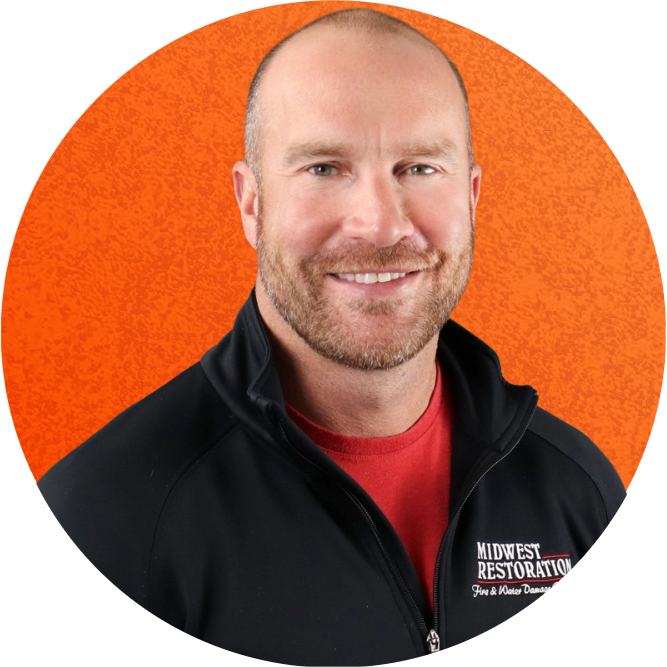
Coyne Borree
Owner
Midwest Restoration
Get complete and consistent field documentation everytime.
Learn how Encircle can help you and your field teams ease the documentation burden.